People often ask me why I work with optical glass.
The answer isn’t straightforward.
I didn’t start with optical glass. My first experience with glass came during a summer workshop with two artisans in Barcelona, where I was introduced to the material through window glass. After that, I spent several years experimenting on my own to understand what glass could do and how I wanted to work with it.
I tried working with colored glass for a while but eventually chose to focus on clear optical glass. I realized my interest wasn’t in glass as a colored material. I was fascinated by transparency and optical illusions.
Today, I work exclusively with Japanese eco-optical glass from Ohara. What draws me to it is its purity. There is something almost paradoxical about a material that can be physically present yet seem invisible at the same time. It occupies space, but often appears to blend into light.
That tension continues to fascinate me.
Light, transparency and perception
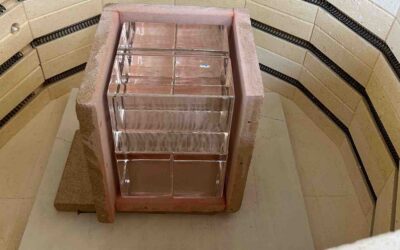
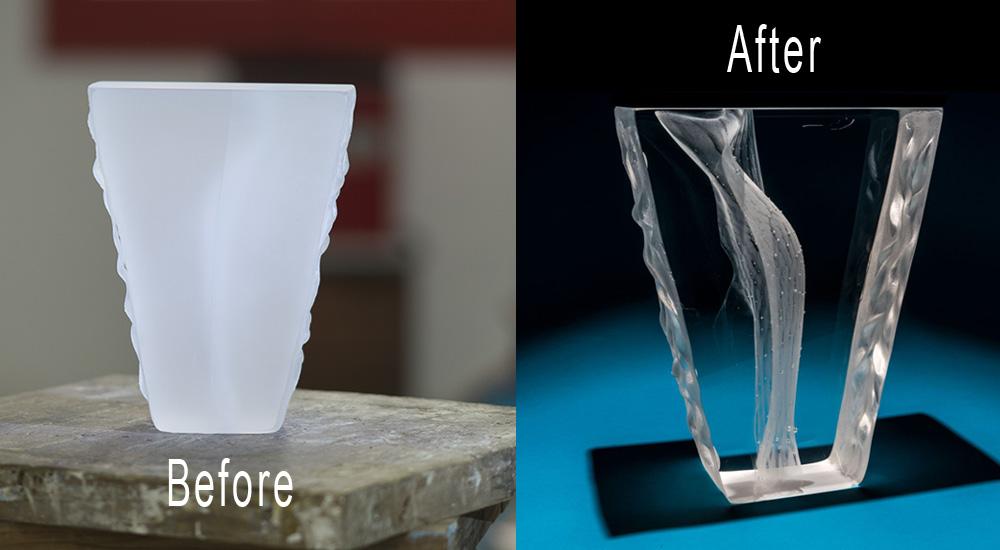
What interests me most about optical glass is how it interacts with light. Its transparency allows light to pass through the material in ways that are impossible to achieve with other sculptural media. This level of transparency requires a long polishing process, much of which happens after the glass leaves the kiln.
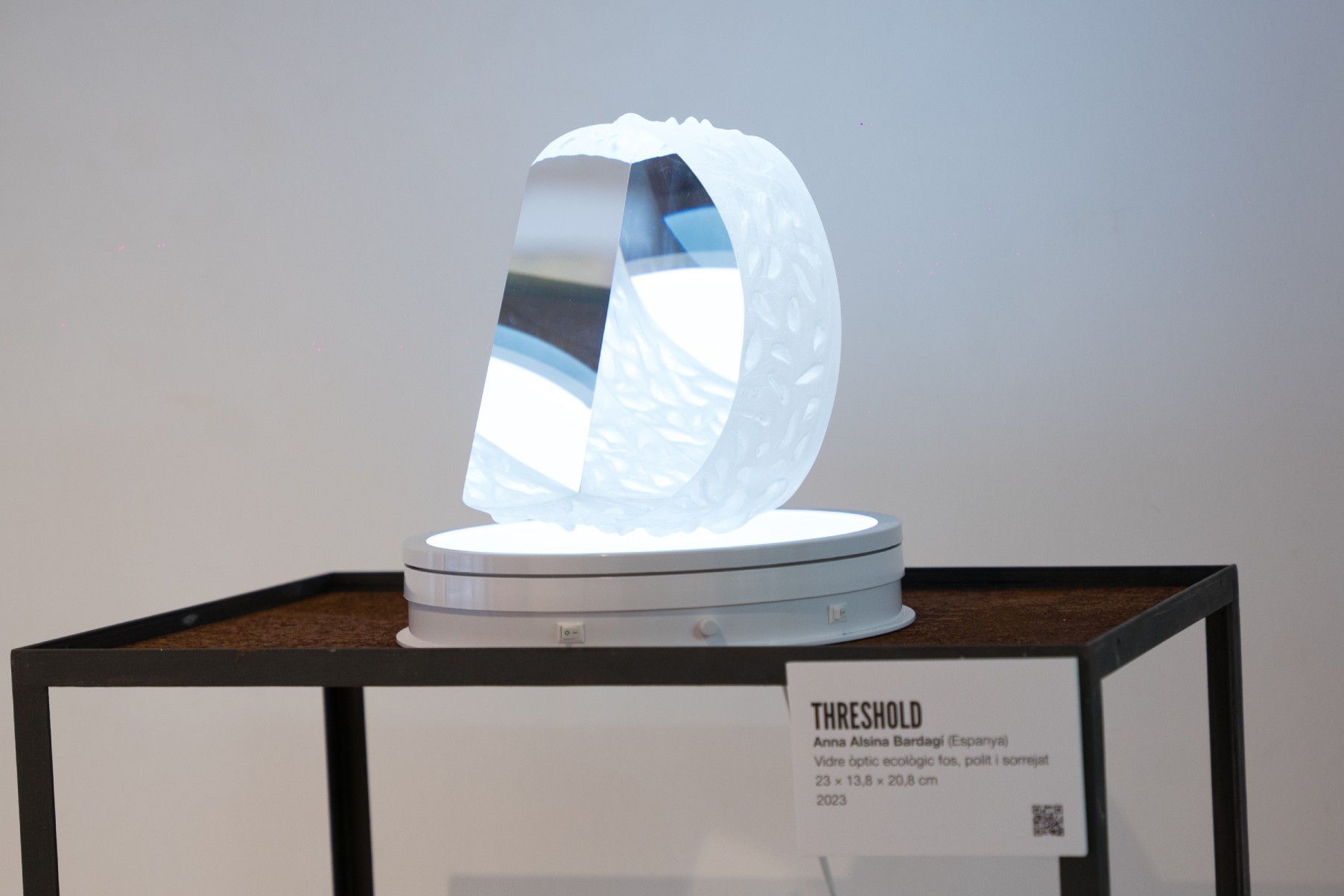
Working with optical glass means understanding that what we see is rarely fixed. Depending on the viewing angle, the surrounding environment, and the quality of light, the same sculpture can look completely different.
Internal reflections appear and disappear. Details that were visible one moment may vanish the next. This constant change is one of the qualities that first attracted me to optical glass and remains central to my work today.