
Pi (π) | Glass sculpture
by Anna Alsina Bardagí
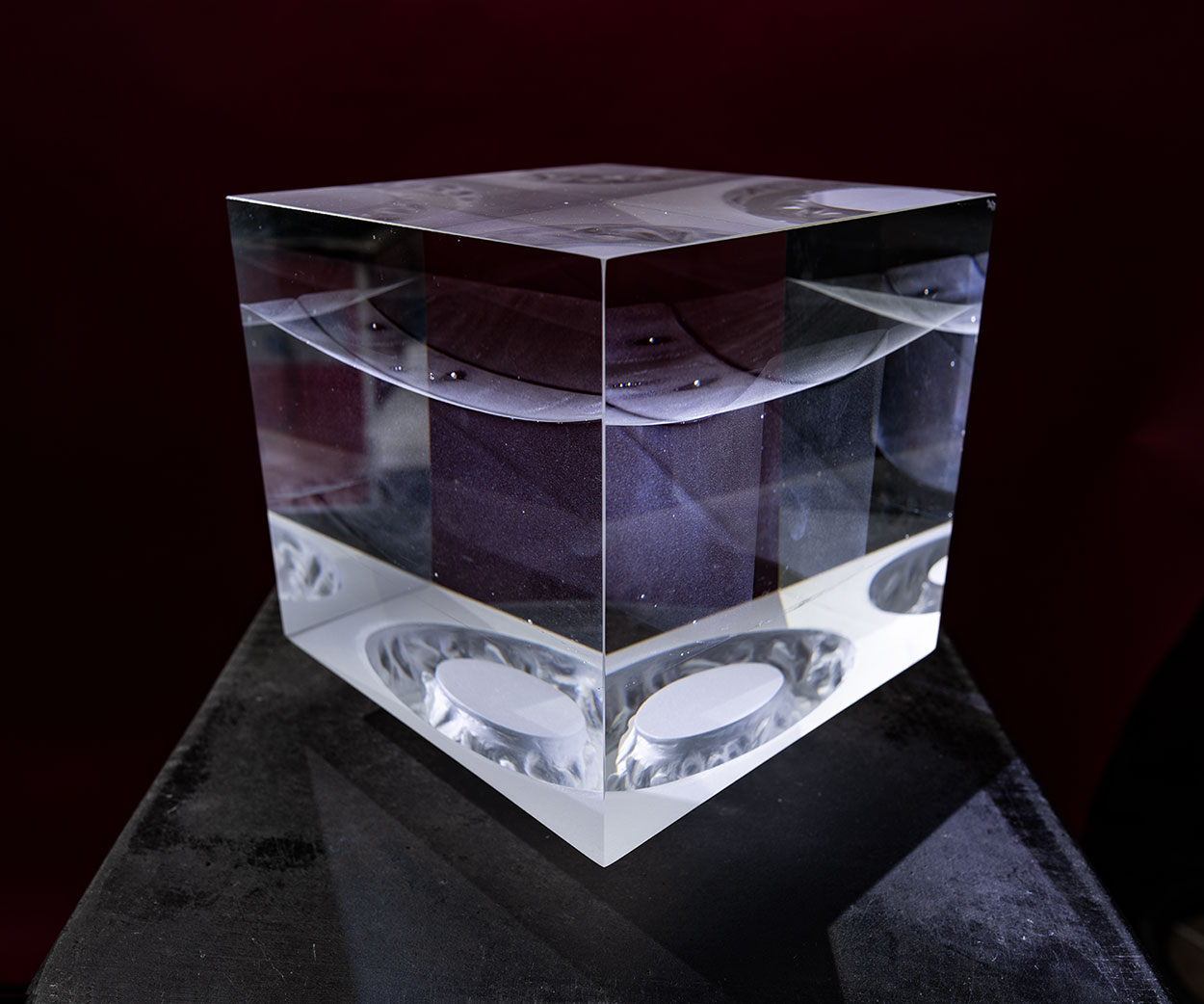
About the artwork
Title: Pi
Material: Eco optical glass
Edition: Unique artwork
Process: Cast glass, polished, and sandblasted
Dimensions: 15.5 x 15.5 x 17.1 cm (6.1 x 6.1 x 6.7 in)
Year created: 2026
FAQs about Pi glass sculpture
What techniques were used to create Pi?
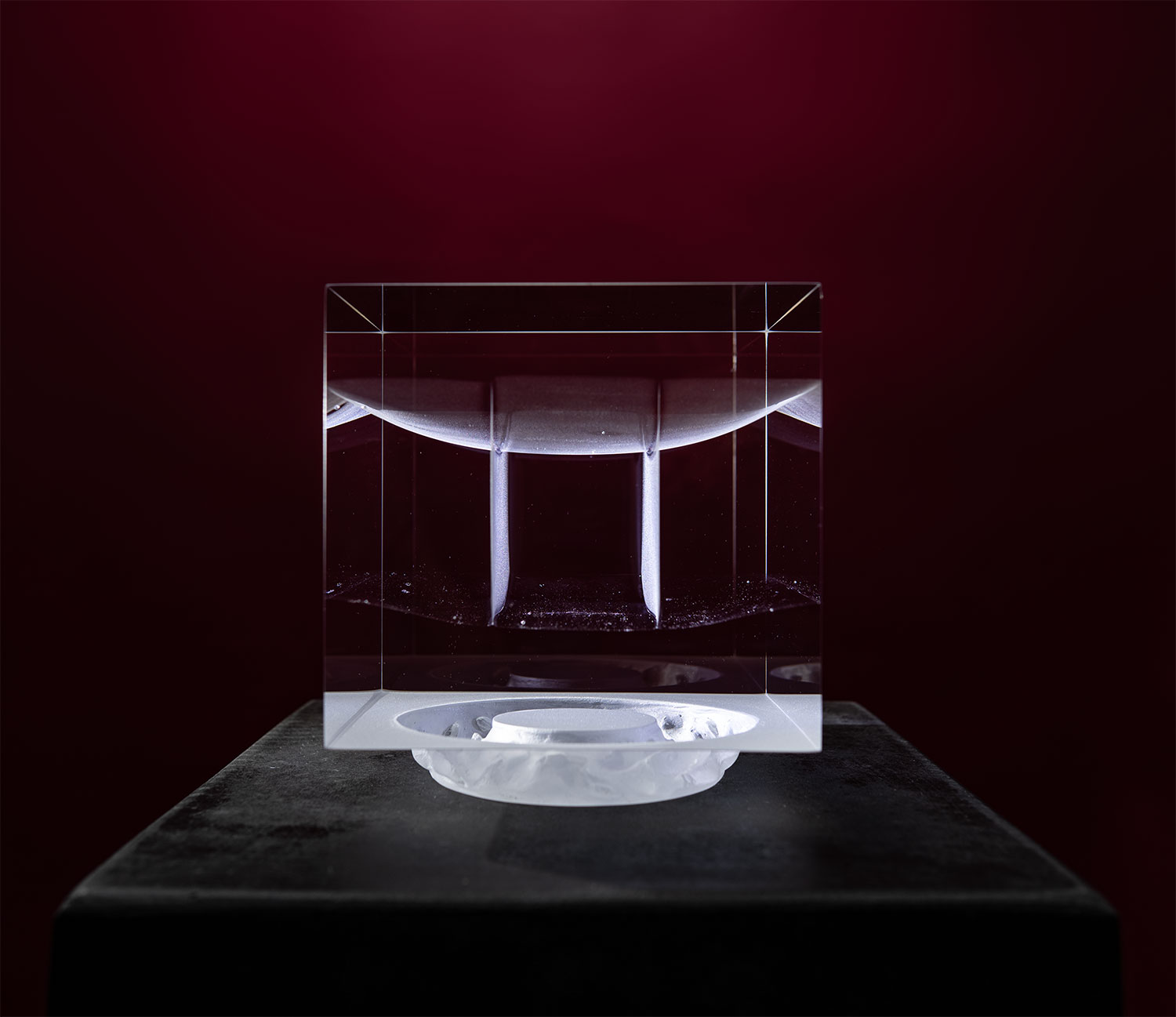
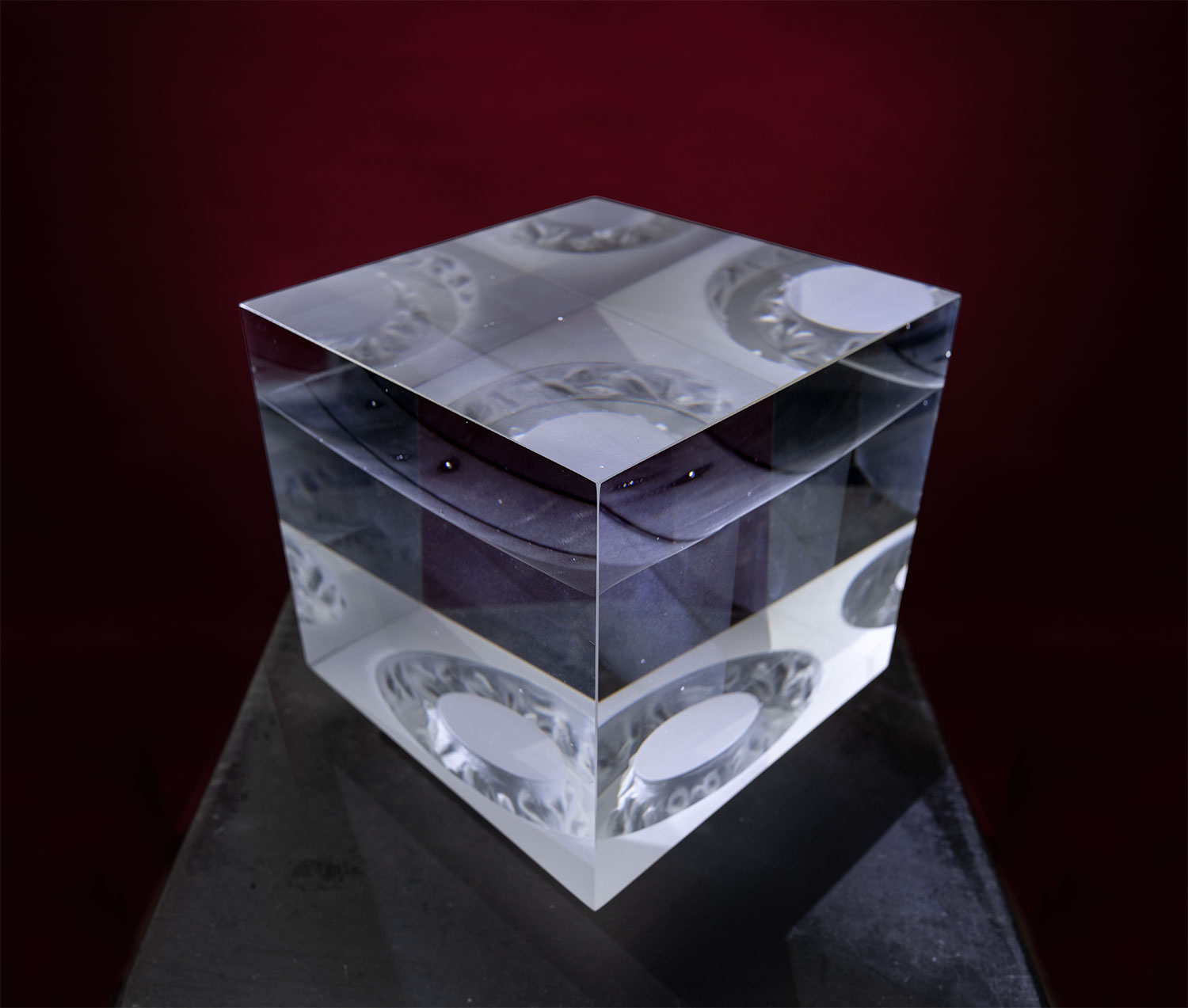
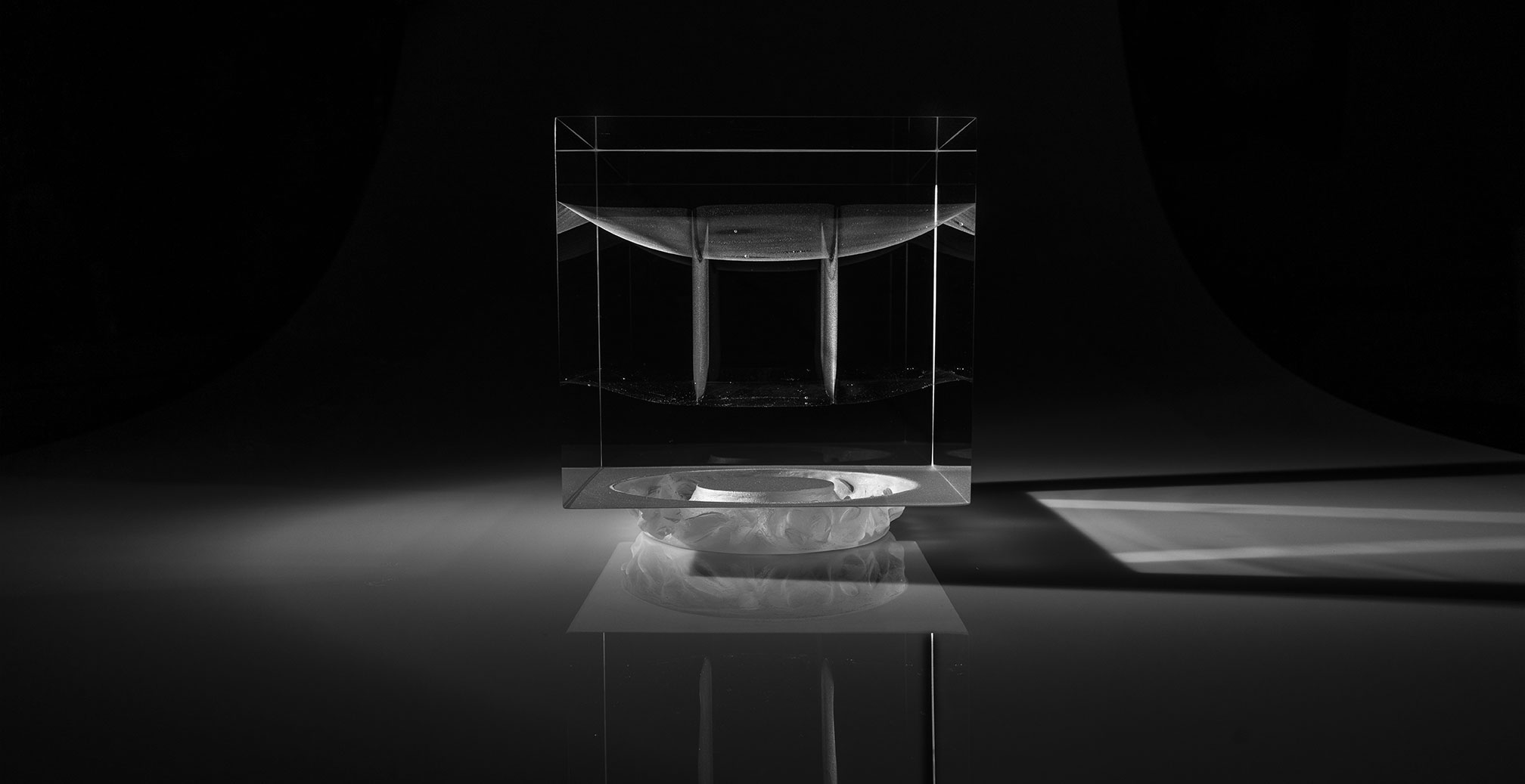
PI was created using kiln-casting techniques. The process began with a plaster mold forming the round structure, which was placed in the kiln encased in vermiculite panels. Glass blocks were sandblasted and positioned according to precise calculations, then assembled inside the mold to construct the internal configuration. The sculpture was fired for approximately two weeks, following a slow and controlled heating and cooling cycle to ensure proper annealing. After firing, the piece underwent extensive cold-working to achieve optical clarity and transparency.
How are the internal effects achieved?
What type of glass was used?
Pi was made using Ohara eco-optical glass S-BSL7, a lead- and arsenic-free glass selected for its high purity and controlled light transmission. Its optical properties allow the internal sculpture’s configuration to emerge as light moves through the form.
How long did it take to make Pi?
Does light affect the sculpture’s appearance?
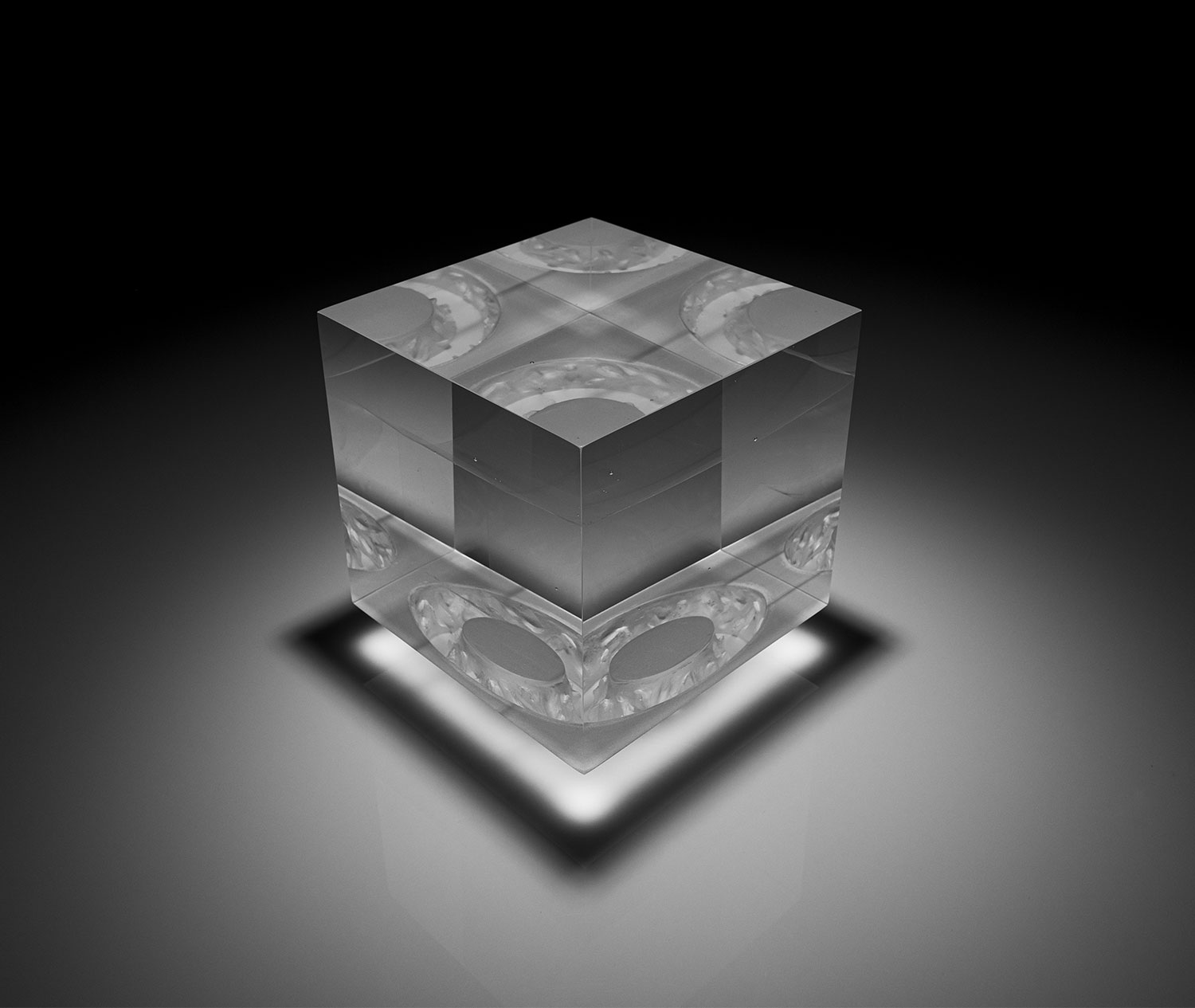
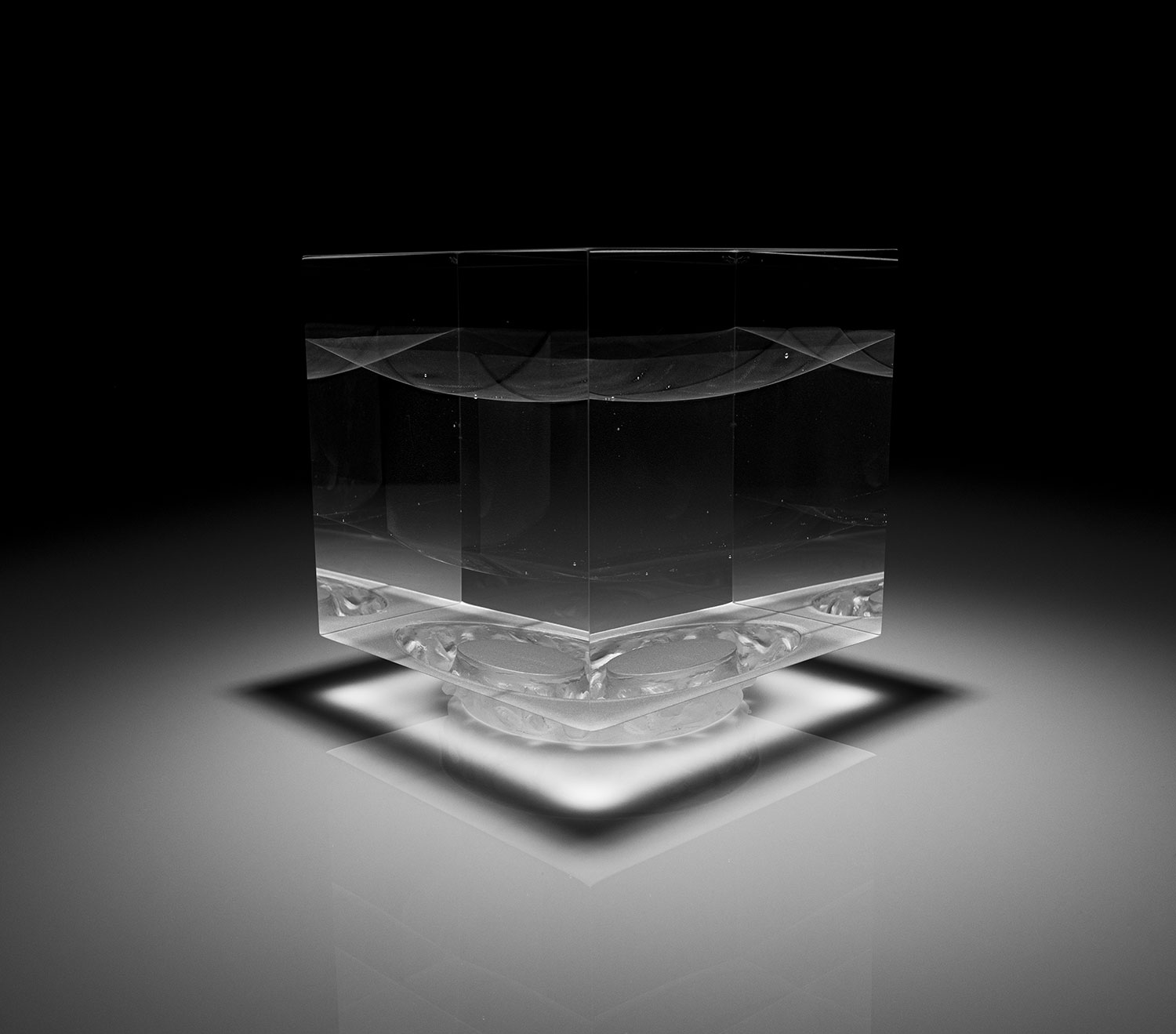
Yes. The appearance of PI changes depending on the direction and quality of light. As light passes through the glass, it is transmitted, reflected, and refracted, revealing different depths. The sculpture shifts in perception as the viewing angle and lighting conditions change.